About Bobby Jones

Bobby Jones began his land mobile radio communications career in 1987 with Motorola's Land Mobile Product Sector, following the completion of a Bachelor of Science in Electrical Engineering from Texas A&M University. Over the next seventeen years, he served as a Motorola radio systems engineer in Houston, including eight years as a Systems Engineering Manager covering seven states.
In 2006, he joined RCC Consultants to lead the City of Houston’s Project 25 (P25) radio system project. Over the following twelve years, he managed and delivered numerous large-scale public safety and utility radio system projects as both an engineering consultant and project manager. Today, he continues to provide these services through Jones P25 Consulting, offering clients the benefit of decades of hands-on experience in planning, design, and implementation of mission-critical communications systems.
At Jones P25 Consulting, clients work directly with Bobby, ensuring consistent senior-level expertise throughout every phase of a project.
City of Houston
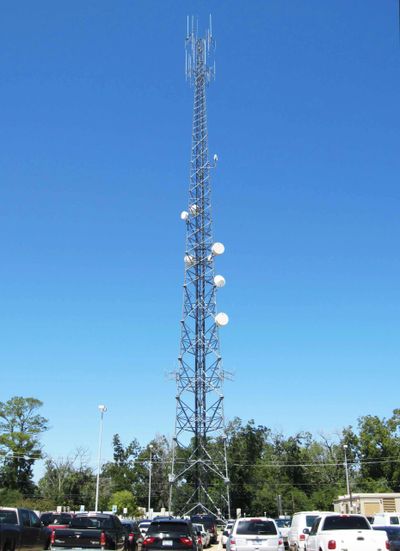
Enterprise P25 Public Safety Communications System
Bobby served as the chief engineering consultant and project manager for the City of Houston in the planning, procurement, and implementation of a P25 radio communications system supporting police, fire, and public works operations. The system was procured through a competitive Request for Proposal (RFP) process and ultimately awarded to Motorola Solutions.
This effort transformed multiple independent legacy systems into a single, interoperable platform designed to meet the City’s long-term operational, coverage, and reliability requirements. He worked closely with City leadership and public safety stakeholders to define system needs, establish realistic performance expectations, and develop a defensible procurement strategy aligned with budget constraints.
He authored the technical RFP, guided a structured and protest-resistant evaluation process, and supported contract negotiations resulting in a $130 million system implementation. The system included a large-scale simulcast architecture, extensive infrastructure upgrades, and thousands of subscriber radios supporting daily mission-critical communications.
During implementation, he provided project management and ongoing technical oversight, ensuring vendor accountability, managing risk, and leading system acceptance testing. The project resulted in a modern, scalable communications system that enhanced interoperability across City departments and positioned Houston for long-term public safety communications needs.
Rockwall County, TX
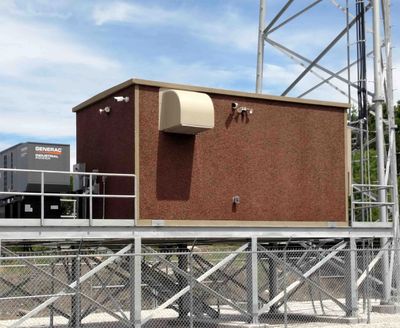
Countywide P25 Public Safety Communications System
Bobby served as the lead engineering consultant and project manager for Rockwall County in the planning, procurement, and implementation of a countywide P25 radio communications system supporting multiple municipalities and public safety agencies. The system was procured through a competitive RFP process and ultimately awarded to Harris Corporation.
The project brought together the Sheriff’s Office, City of Rockwall, and several other cities into a unified communications platform, replacing an aging system and addressing significant gaps in coverage, reliability, and interoperability. Early in the process, he conducted a detailed evaluation of an existing non-competitive vendor proposal, identifying critical deficiencies and guiding the County toward a structured, competitive procurement approach.
He led the development of system requirements, authored the technical RFP, and directed the proposal evaluation and contract negotiation process, resulting in an $8.4 million system implementation aligned with all stakeholders' operational and financial objectives.
During implementation, Bobby provided ongoing technical oversight, ensuring vendor accountability, managing project risks, and supporting system acceptance. The result was a reliable, interoperable communications system that enhanced coordination among all participating agencies and positioned the County for long-term public safety communications needs.
Harris County / TxWARN Regional P25 System
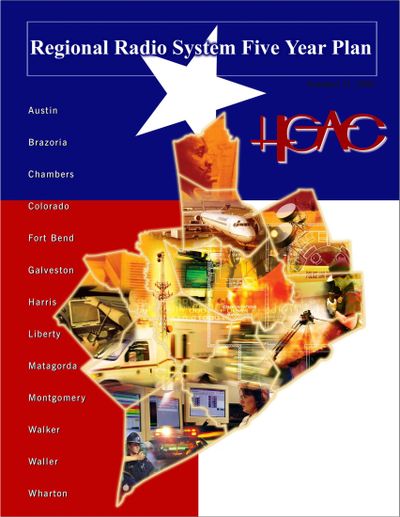
Bobby has been directly involved in the evolution of the Harris County, Texas TxWARN public safety radio communications system since its earliest development. In the 1990s, he served as the lead systems engineer for Motorola Solutions, designing Harris County’s original five-site SmartZone® trunked radio system - laying the technical foundation for what would become a regionally integrated communications network.
In the early 2000s, Bobby worked in partnership with Harris County and the Houston-Galveston Area Council (H-GAC) to develop a comprehensive master plan for a large-scale, interoperable P25 radio system. He led the H-GAC funded initiative and authored a detailed 330-page “Regional Radio System Five Year Plan,” which outlined a 13-county system architecture, budgetary framework, and phased implementation strategy.
This plan ultimately served as the blueprint for the 13-county TxWARN P25 system, which later integrated with the City of Houston’s P25 network to form one of the largest and most capable first responder interoperable radio communications systems in the world.
Nationwide Recognition
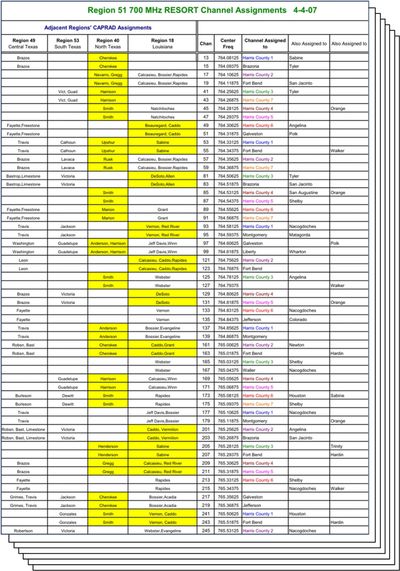
During the early stages of the City of Houston Project 25 system, as the FCC began issuing 700 MHz spectrum assignments, Bobby identified a critical spectrum availability challenge that threatened the feasibility of both the City’s system and Harris County’s TxWARN network. Together, these systems required hundreds of frequencies, yet the existing 800 MHz band in the Houston area was already saturated. Compounding the issue, the initial 700 MHz Regional Plan for Region 51 did not allocate frequencies in a manner that maximized efficiency for the region, leaving an insufficient number of usable channels to support both systems.
Recognizing this constraint early, Bobby independently undertook a comprehensive re-evaluation of the Region 51 700 MHz frequency plan. Through a detailed re-sorting and optimization of the assigned spectrum, he transformed the original allocation of just 24 frequencies for the Harris County region into more than 170 usable frequencies within the same geographic footprint. This innovative approach not only enabled the successful design and coexistence of the TxWARN and City of Houston systems but also established a new model for spectrum efficiency. The methodology gained national recognition and ultimately contributed to enhancements in the CAPRAD system for 700 MHz channel allotment, influencing how 700 MHz regional planning is approached across the country.
Houston-Galveston Area Council (H-GAC)
Regional Interoperable Communications Plan (RICP)
Bobby served as the sole project manager and primary author of the third-generation 2014 Regional Interoperable Communications Plan (RICP) for H-GAC, delivering the document in its entirety. This effort represented a fundamental shift from prior RICP versions, which had been largely template driven. Recognizing that the region’s communications environment had evolved significantly, the IT Director for the City of Houston specifically requested that Bobby lead a complete re-write of the plan. The result was a modernized, operationally focused document that aligned with the maturity of the region’s communications infrastructure and the real-world needs of public safety agencies.
By 2014, the regional P25 landscape had transformed dramatically. The TxWARN P25 system had expanded across all 13 H-GAC counties, and the City of Houston’s P25 system was fully integrated with the TxWARN system, placing more than 95% of first responders within this 13-county area on a shared, standards-based platform. Bobby’s RICP redefined the purpose of the plan - from a descriptive reference to a practical, field-oriented guide - introducing a comprehensive Standard Operating Procedures section that clearly outlined how interoperability is achieved in real-world scenarios. The document provided both a detailed characterization of one of the most complex interoperable radio systems in the world and a usable operational framework for agencies across the region.